
- 1
- 11
- 1
- 11
Ngorongoro
The Ngorongoro Conservation Area is one of Tanzania’s most extraordinary natural destinations and one of Africa’s most remarkable wildlife sanctuaries. Located in northern Tanzania, this UNESCO World Heritage Site is famous for the breathtaking Ngorongoro Crater, a vast volcanic caldera that shelters an incredible concentration of wildlife within its dramatic walls.
Often referred to as the “African Eden,” Ngorongoro offers a unique safari experience where visitors can observe a remarkable variety of animals in a relatively small area. The crater floor is home to thousands of large mammals, including lions, elephants, buffaloes, zebras, wildebeests, hippos, hyenas, and the endangered black rhinoceros.
Beyond its exceptional wildlife, Ngorongoro is a destination of extraordinary landscapes, ancient geological history, and rich cultural heritage. The conservation area is not only dedicated to protecting wildlife but also supports the traditional way of life of local communities, including the Maasai people who have lived alongside nature in this region for generations.
A visit to Ngorongoro provides more than just a safari—it offers an opportunity to experience one of the planet’s most unique ecosystems, where wildlife, landscapes, and human culture exist together in remarkable harmony.
Location and Geography
The Ngorongoro Conservation Area is located in the northern Tanzania safari circuit, approximately 180 kilometers west of Arusha. It forms part of the larger Serengeti ecosystem and lies between Lake Manyara National Park and Serengeti National Park, making it a key destination on most Northern Tanzania safari itineraries.
The conservation area covers approximately 8,292 square kilometers and features a diverse range of landscapes, including volcanic highlands, grasslands, forests, mountains, and crater lakes.
The main attraction, the Ngorongoro Crater, is the world’s largest intact volcanic caldera. Created millions of years ago after a massive volcanic eruption and collapse, the crater measures approximately 20 kilometers wide and covers an area of about 260 square kilometers. Its enclosed environment creates a natural wildlife sanctuary where animals thrive throughout the year.
The combination of dramatic landscapes and abundant wildlife makes Ngorongoro one of the most unique safari destinations in the world.
History and Conservation
The Ngorongoro Conservation Area was established in 1959 as a unique conservation model designed to protect wildlife while allowing local communities to continue their traditional activities. Unlike many national parks, Ngorongoro follows a multiple land-use approach where wildlife conservation, tourism, and pastoral activities coexist.
In 1979, the Ngorongoro Conservation Area was designated a UNESCO World Heritage Site due to its outstanding natural beauty, geological importance, archaeological significance, and biodiversity.
The region has also played an important role in understanding human history. The nearby Olduvai Gorge, often called the “Cradle of Humankind,” has provided some of the world’s most important archaeological discoveries, including evidence of early human ancestors dating back millions of years.
Today, Ngorongoro remains one of Tanzania’s most protected and valued conservation areas, attracting visitors from around the world while supporting important conservation efforts.
The Ngorongoro Crater: A Natural Wonder
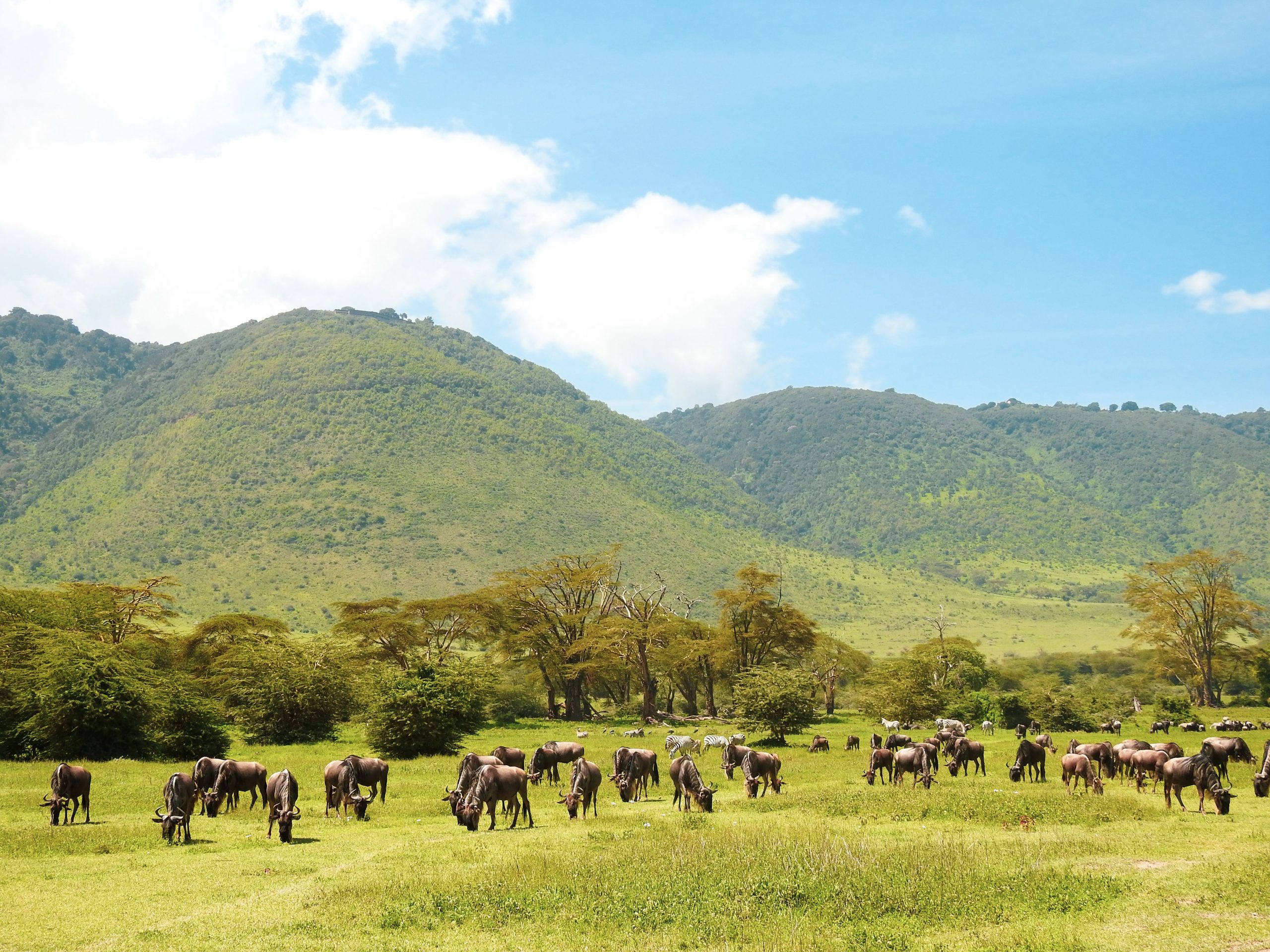
The Ngorongoro Crater is the crown jewel of the conservation area and one of Africa’s greatest natural wonders. Formed approximately two to three million years ago after the collapse of a massive volcano, the crater has developed into a self-contained ecosystem supporting an extraordinary variety of wildlife.
The crater walls rise more than 600 meters above the floor, creating a breathtaking natural amphitheater filled with grasslands, forests, wetlands, and lakes. This unique environment provides permanent water and food sources, allowing many animals to remain inside the crater throughout the year.
The crater floor offers some of the best wildlife viewing opportunities in Tanzania. Visitors can often see large herds of herbivores alongside powerful predators, creating unforgettable safari moments against the backdrop of ancient volcanic landscapes.
The spectacular combination of geology, wildlife, and scenery is what makes the Ngorongoro Crater one of the world’s most iconic destinations.
Wildlife Experience at Ngorongoro

Ngorongoro Conservation Area is famous for its incredible wildlife density and is one of the best places in Tanzania to experience a Big Five safari.
The crater provides a habitat for thousands of animals, including:
- Lions
- Elephants
- African buffaloes
- Leopards
- Black rhinoceros
- Zebras
- Wildebeests
- Hippos
- Hyenas
- Jackals
- Warthogs
- Various antelope species
The area is particularly important for the conservation of the endangered black rhino, making it one of the best places in Tanzania to have a chance of spotting this rare species.
The crater is also home to a large population of predators, including lions and hyenas, making it an excellent destination for visitors interested in observing predator-prey interactions.
Bird lovers will also enjoy Ngorongoro, with hundreds of bird species found throughout the area, including flamingos around the crater lakes, eagles, vultures, and many colorful water birds.
Top Attractions and Things to Do
1. Ngorongoro Crater Game Drive
The main activity in Ngorongoro is a full-day or half-day game drive inside the crater. Visitors descend through the crater walls and explore the grasslands, forests, and wetlands while searching for wildlife.
The crater provides some of the highest chances of seeing multiple species in a short period, making it ideal for both first-time safari travelers and experienced explorers.
2. Maasai Cultural Experience
Ngorongoro is also famous for its connection with the Maasai people. Visitors can visit traditional Maasai villages to learn about their culture, traditions, livestock practices, dances, and unique relationship with the environment.
This cultural experience adds a deeper dimension to the safari by allowing travelers to connect with the people who have lived in this landscape for generations.
3. Olduvai Gorge Visit
Located within the conservation area, Olduvai Gorge is one of the world’s most important archaeological sites. Visitors can learn about early human evolution and explore discoveries that have helped scientists understand the origins of humanity.
4. Empakaai Crater
Beyond the famous Ngorongoro Crater, the conservation area also contains other beautiful volcanic features such as Empakaai Crater. This less-visited destination offers hiking opportunities and stunning views of a deep crater lake surrounded by forests.
Best Time to Visit Ngorongoro Conservation Area

Create unforgettable family memories on this carefully designed 4 Days Family Safari Adventure, taking you through three of Tanzania's most remarkable wildlife destinations: Tarangire National...
Duration
4 Days
$2000
Next Departures
September 12, 2026 (Available)September 13, 2026 (Available)September 14, 2026 (Available)

Experience Tanzania at its most spectacular on this 9 Days Ultimate Luxury Safari, an immersive journey through the country's most celebrated northern wildlife destinations. Carefully...
Duration
9 Days
$6300
Next Departures
September 12, 2026 (Available)September 13, 2026 (Available)September 14, 2026 (Available)

Discover Tanzania through an elegant seven-day journey designed for travelers who want to experience the country's iconic wildlife while enjoying comfort, privacy, personalized service, and...
Duration
7 Days
$4900
Next Departures
September 12, 2026 (Available)September 13, 2026 (Available)September 14, 2026 (Available)

Experience the finest of Tanzania's Northern Safari Circuit on this exclusive 5 Days Luxury Serengeti Safari, combining exceptional wildlife, breathtaking landscapes, and carefully selected luxury...
Duration
5 Days
$3500
Next Departures
September 12, 2026 (Available)September 13, 2026 (Available)September 14, 2026 (Available)

Experience Tanzania at its most refined on this exclusive 4 Days Luxury Tanzania Escape, designed for travelers who want to combine extraordinary wildlife encounters with...
Duration
4 Days
$2800
Next Departures
September 12, 2026 (Available)September 13, 2026 (Available)September 14, 2026 (Available)

Embark on an unforgettable 7-day Tanzania Wildlife Safari through some of the most remarkable landscapes of the Northern Safari Circuit. This carefully designed journey combines...
Duration
7 Days
$3500
Next Departures
September 12, 2026 (Available)September 13, 2026 (Available)September 14, 2026 (Available)


Experience an exceptional journey through Tanzania's legendary Northern Safari Circuit on this 5-day Tanzania Safari, combining the wildlife-rich landscapes of Tarangire National Park, the Ngorongoro...
Duration
5 Days
$2500
Next Departures
September 12, 2026 (Available)September 13, 2026 (Available)September 14, 2026 (Available)

Experience the essence of Tanzania's legendary northern safari circuit on this carefully designed 4-day Tanzania Classic Safari, taking you through three of the country's most...
Duration
4 Days
$2000
Next Departures
September 12, 2026 (Available)September 13, 2026 (Available)September 14, 2026 (Available)

Experience one of Tanzania's most remarkable safari destinations on this unforgettable Ngorongoro Crater Day Trip. Perfect for travelers with limited time, this full-day adventure takes...
Duration
1 Day
$90
Next Departures
September 12, 2026 (Available)September 13, 2026 (Available)September 14, 2026 (Available)