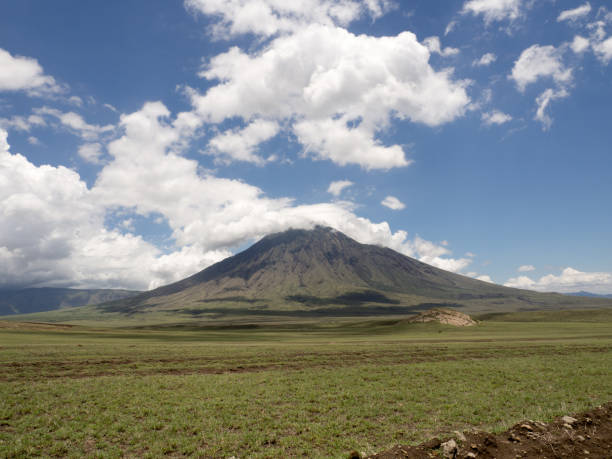
Mount Oldonyo Lengai is one of the most fascinating and mysterious mountains on Earth. Rising dramatically from the floor of the Great Rift Valley in northern Tanzania, this iconic peak is not just a trekking destination — it is a living volcano, a sacred Maasai spiritual site, a geological wonder, and a natural monument that tells the story of Africa’s tectonic evolution. Known as “The Mountain of God” in the Maasai language, Oldonyo Lengai stands alone both physically and culturally, drawing adventurers, scientists, photographers, spiritual travelers, and nature lovers from around the world
Unlike any other volcano on the planet, Oldonyo Lengai erupts carbonatite lava, a rare type of lava that is cooler, darker, and more fluid than the typical molten rock seen elsewhere. This makes it one of the most scientifically unique mountains on Earth. Combined with its steep slopes, active volcanic craters, surreal ash landscapes, and proximity to Lake Natron — one of Africa’s most important flamingo breeding grounds — Oldonyo Lengai offers an adventure that cannot be replicated anywhere else.
At Kilimanjaro Safaris Champions, we believe that Oldonyo Lengai is not just a climb but a transformational experience — one that blends physical challenge, spiritual discovery, geological education, and raw African wilderness into one unforgettable journey. This deep guide explores everything you need to know about Mount Oldonyo Lengai: its geography, geology, cultural meaning, climbing experience, safety considerations, best time to visit, environmental importance, and why it stands as one of Tanzania’s most extraordinary adventure destinations.
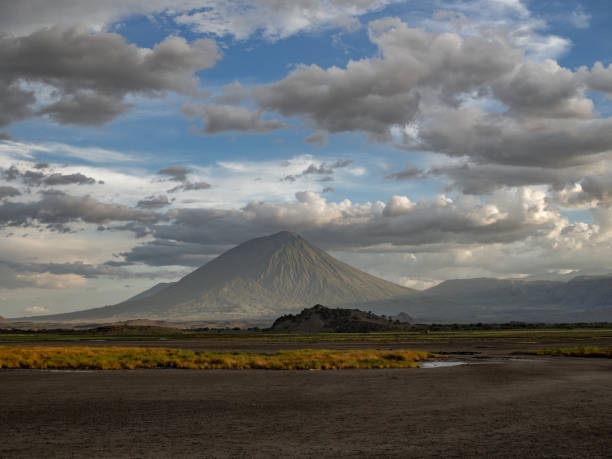
Oldonyo Lengai is unlike any volcano on Earth. While most volcanoes erupt silicate lava — rich in silicon dioxide and extremely hot — Oldonyo Lengai produces natrocarbonatite lava, a rare type of lava composed mainly of sodium carbonate and potassium carbonate. This lava is dramatically cooler than normal lava, erupting at approximately 500–600°C, compared to over 1,000°C for typical basaltic lava.
This unusual lava appears black or dark brown when molten, but rapidly cools and turns white or light gray, giving the mountain’s crater a surreal, otherworldly appearance. Instead of slow, thick flows, Oldonyo Lengai’s lava moves like thick oil or mud, flowing rapidly across the crater floor and forming delicate spires, hornitos, and brittle crusts that resemble frozen candle wax.
Because carbonatite lava is extremely rare, Oldonyo Lengai provides scientists with a unique opportunity to study Earth’s deep mantle chemistry and volcanic processes that cannot be observed anywhere else. The volcano is part of the East African Rift System, where tectonic plates are slowly pulling apart, allowing magma from deep within the Earth to rise to the surface.
The volcano has experienced frequent small eruptions throughout recorded history, with significant activity observed in the early 20th century, the late 1960s, and major explosive eruptions in 2007–2008, which reshaped the summit crater and blanketed nearby areas with ash. Today, Oldonyo Lengai remains active, with periodic gas emissions, minor lava flows, and fumarolic activity, making it one of Africa’s most geologically dynamic landmarks.
For climbers, this geological uniqueness means that ascending Oldonyo Lengai is not simply a hike — it is a walk across Earth’s youngest landscapes, shaped by fire, pressure, and deep planetary processes still unfolding today. At Kilimanjaro Safaris Champions, our guides interpret these geological features in detail, helping travelers understand how lava chemistry, plate tectonics, and volcanic evolution converge at this singular mountain.
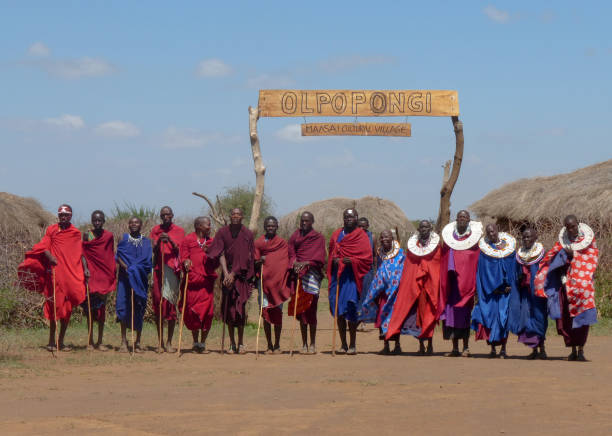
To the Maasai people, Oldonyo Lengai is not just a volcano — it is sacred ground. The name “Oldonyo Lengai” translates to “Mountain of God”, reflecting the belief that this mountain is the dwelling place of Engai, the Maasai deity associated with rain, fertility, life, and divine order. For generations, Maasai elders and spiritual leaders have regarded this mountain as a bridge between the physical world and the spiritual realm.
In Maasai cosmology, Engai communicates through natural phenomena such as thunder, lightning, rain, and volcanic activity. Eruptions from Oldonyo Lengai have traditionally been interpreted as signs of divine communication — sometimes blessings, sometimes warnings — calling communities to prayer, reflection, or ritual action. When drought strikes, elders may face the mountain and pray toward its slopes, asking Engai to release rain and restore balance to the land.
The mountain’s spiritual power is further reinforced by its isolation and dramatic form. Rising alone from the Rift Valley floor, Oldonyo Lengai appears as a singular axis mundi — a central pillar connecting earth and sky. This symbolism resonates deeply in Maasai oral traditions, songs, and ceremonies passed down across generations.
Unlike many tourist destinations that have been stripped of cultural meaning, Oldonyo Lengai remains closely tied to living traditions. Maasai communities still graze livestock near its base, conduct rituals in its shadow, and treat its slopes with reverence. Visitors who approach the mountain respectfully are welcomed into a landscape that is not only physically demanding but spiritually significant.
At Kilimanjaro Safaris Champions, we honor this heritage by working closely with local Maasai communities, employing Maasai guides and porters, and ensuring that our climbs respect cultural values, sacred spaces, and traditional land use practices. We believe that true adventure tourism must preserve not only ecosystems but also living cultures — and Oldonyo Lengai stands as one of Tanzania’s most powerful symbols of this connection.
Climbing Mount Oldonyo Lengai is radically different from climbing Mount Kilimanjaro. While Kilimanjaro is a long, gradual, multi-day trek focused on altitude acclimatization, Oldonyo Lengai is a short, steep, physically demanding climb, often completed overnight to avoid extreme heat and to reach the summit at sunrise.
The climb typically begins around midnight, when temperatures in the Rift Valley drop, making the ascent safer and more manageable. Climbers move by headlamp through loose volcanic ash, lava scree, and steep ridges, ascending approximately 1,600 vertical meters in a matter of hours. The trail is narrow, exposed in places, and composed largely of unstable volcanic material, requiring careful foot placement and constant balance.
Unlike forested or alpine climbs, Oldonyo Lengai offers little vegetation cover on its upper slopes. The terrain feels raw and elemental — black ash underfoot, sulfurous scents in the air, and expansive views stretching across the Rift Valley floor. The steepness of the climb demands strong legs, cardiovascular endurance, and mental focus. Many sections require short scrambling, use of hands for balance, and slow, deliberate movement.
However, the reward at the summit is unlike anything else in East Africa. Reaching the crater rim at sunrise reveals a surreal volcanic landscape: pale carbonatite lava flows frozen into intricate patterns, steaming fumaroles releasing warm gases into cold air, and distant views of Lake Natron glowing pink beneath the rising sun. On clear mornings, climbers can see as far as Mount Meru, Mount Kilimanjaro, and the Ngorongoro Highlands.
Standing at the summit of an active volcano, watching the Earth breathe through vents beneath your feet, creates a sense of awe rarely matched by other climbs. The experience feels primal, humbling, and transformative — reminding climbers that they are standing not only above the land but atop living geology itself.
At Kilimanjaro Safaris Champions, our Oldonyo Lengai climbs are led by experienced local guides trained in volcanic terrain navigation, emergency response, and cultural interpretation. We emphasize slow pacing, safety protocols, and environmental responsibility, ensuring that each ascent is both thrilling and secure.
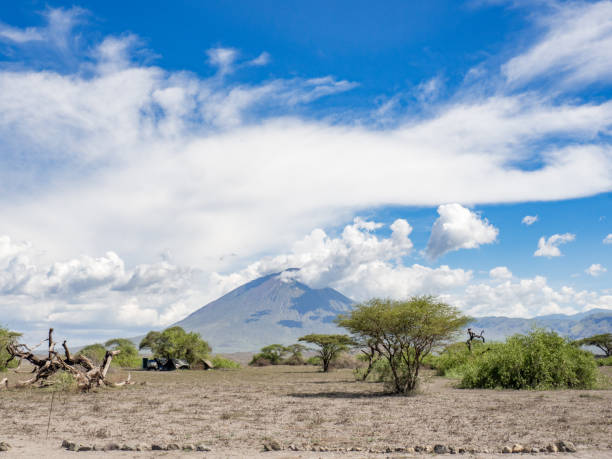
Oldonyo Lengai is considered one of Tanzania’s most physically demanding short climbs, despite its moderate altitude compared to Kilimanjaro. The challenge comes not from oxygen deprivation but from steep gradient, unstable footing, heat exposure, and sustained exertion.
The ascent gains roughly 1,600 meters in under 7 kilometers, making it significantly steeper than most trekking routes. This steepness places intense strain on calves, quadriceps, hamstrings, glutes, and cardiovascular systems. Descending the same terrain — often in daylight — places additional stress on knees and ankles, requiring strong joints, balance, and controlled movement.
Unlike Kilimanjaro, where climbers walk for several days and gradually build endurance, Oldonyo Lengai compresses its difficulty into a single night of continuous uphill effort. This makes it best suited for travelers who are already moderately fit, comfortable hiking steep terrain, and capable of sustained exertion over several hours.
However, technical mountaineering skills are not required. No ropes, crampons, or climbing hardware are used. The climb relies on balance, stamina, coordination, and mental resilience rather than technical climbing techniques.
At Kilimanjaro Safaris Champions, we provide detailed pre-climb briefings, fitness recommendations, and pacing strategies to ensure climbers approach the ascent safely and confidently. We also encourage pre-trip training focused on stair climbing, hill hiking, cardiovascular endurance, and lower-body strength — all of which significantly improve summit success and enjoyment.
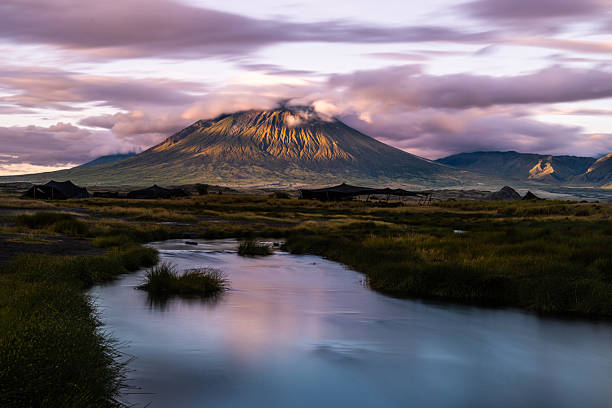
Oldonyo Lengai sits within a semi-arid climate zone, meaning temperatures at the base can exceed 30°C (86°F) during the day, while summit temperatures at night may drop close to freezing due to elevation and wind exposure. Weather conditions change rapidly, and climbers must be prepared for both heat and cold within a single ascent.
The best time to climb Oldonyo Lengai is during the dry seasons:
The long rainy season (March to May) and short rains (November to December) make the climb more difficult and dangerous due to slippery volcanic ash, reduced visibility, and increased erosion. Rain transforms the steep slopes into unstable mud fields, significantly increasing risk of slips, falls, and injuries.
Night climbing is standard practice because cooler temperatures reduce heat stress, dehydration risk, and fatigue. Sunrise summits also offer optimal visibility and photography opportunities while minimizing exposure to midday heat on descent.
At Kilimanjaro Safaris Champions, we monitor weather patterns closely and adjust itineraries to ensure climber safety and optimal summit conditions. Our local expertise allows us to select the best nights for ascent based on cloud cover, wind patterns, and volcanic activity reports

As an active volcano, Oldonyo Lengai requires careful monitoring and risk management. While most eruptions are small and localized, the mountain has experienced explosive events in the past, including the 2007–2008 eruptions that dramatically altered the crater landscape.
Modern climbing operations rely on real-time geological assessments, government advisories, and local knowledge to determine safe climbing windows. Climbers are generally not allowed to enter the crater itself, but instead reach the rim to observe volcanic features from a safe distance.
Other safety considerations include:
At Kilimanjaro Safaris Champions, we prioritize safety through:
We believe that adventure should never compromise safety, and our Oldonyo Lengai climbs balance thrill with responsibility, ensuring that travelers experience the mountain’s power without unnecessary risk
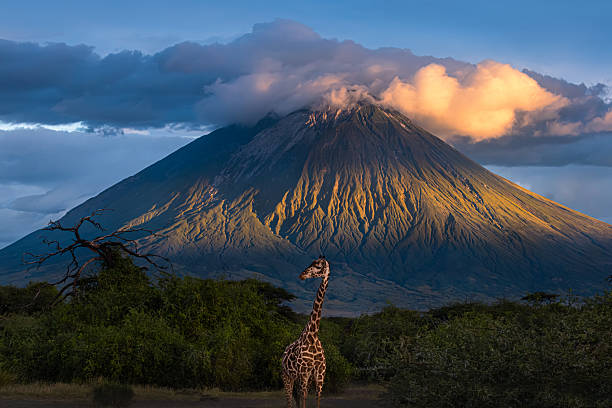
Despite its harsh volcanic environment, the region surrounding Oldonyo Lengai supports diverse ecosystems adapted to arid and alkaline conditions. The mountain rises above Lake Natron, one of the world’s most important breeding sites for lesser flamingos, hosting up to 75% of the global population during peak breeding seasons.
The lake’s extreme alkalinity and high salinity create conditions inhospitable to most organisms but ideal for specialized algae that flamingos feed on. These algae bloom in brilliant pink and red hues, tinting the lake and attracting massive bird populations that migrate seasonally across East Africa.
Surrounding savannahs support wildlife such as zebras, giraffes, antelope, jackals, hyenas, and bird species adapted to dry environments. The region also lies within migratory corridors connecting the Serengeti ecosystem to southern Kenya and the Rift Valley basin.
Vegetation near the base includes acacia woodlands, salt-tolerant grasses, and drought-resistant shrubs, while upper slopes remain largely barren due to volcanic activity, ash soils, and limited moisture retention.
At Kilimanjaro Safaris Champions, we promote responsible tourism practices that protect these fragile ecosystems. We follow Leave No Trace principles, minimize waste, respect wildlife corridors, and collaborate with local communities to ensure that tourism benefits both conservation and livelihoods.
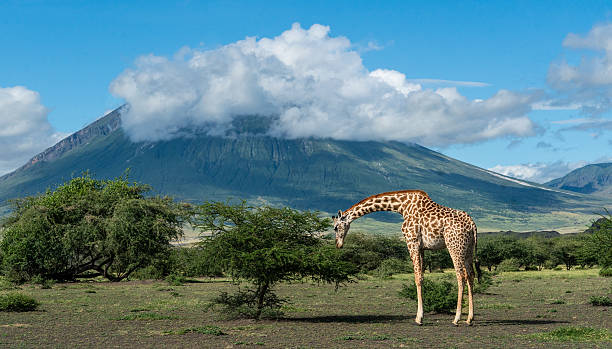
Oldonyo Lengai has fascinated explorers, missionaries, geologists, and scientists for over a century. Early European explorers in the late 19th and early 20th centuries recorded accounts of eruptions, unusual lava behavior, and Maasai spiritual traditions associated with the mountain.
In the mid-20th century, volcanologists confirmed the presence of carbonatite lava, making Oldonyo Lengai a global geological anomaly. Since then, the mountain has become a living laboratory for studying mantle chemistry, rift tectonics, magma differentiation, and volcanic gas emissions.
Satellite monitoring, seismic studies, and ground-based surveys continue to track volcanic activity, helping scientists understand eruption cycles, magma chamber behavior, and regional tectonic stress patterns across the East African Rift.
Climbers today walk across landscapes that scientists study to understand Earth’s deepest processes — making every ascent not only a physical challenge but also a journey through planetary history.
At Kilimanjaro Safaris Champions, we integrate scientific interpretation into our climbs, explaining volcanic formations, lava structures, crater morphology, and tectonic processes in accessible language that enriches the climbing experience beyond physical achievement.
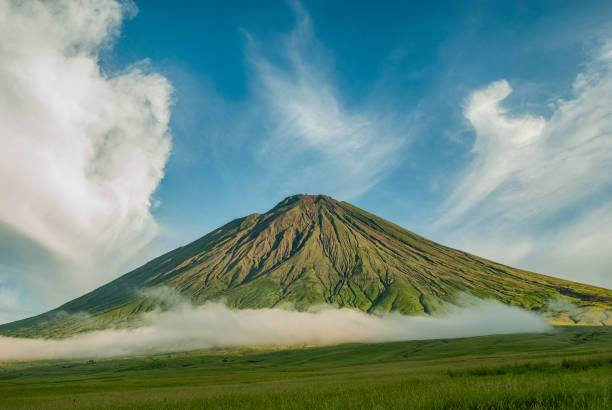
Oldonyo Lengai stands apart from other mountains in Tanzania — and the world — for several reasons:
Unlike Kilimanjaro, which focuses on altitude acclimatization and multi-day trekking, Oldonyo Lengai offers a condensed but intense journey — a single night that compresses geological wonder, physical endurance, cultural meaning, and spiritual reflection into one unforgettable experience.
At Kilimanjaro Safaris Champions, we view Oldonyo Lengai not merely as a climb but as a rite of passage — an encounter with Earth’s deepest forces and humanity’s oldest stories, standing face to face on the slopes of a living volcano.
Most Oldonyo Lengai climbs follow a similar structure:
This itinerary allows climbers to experience the mountain safely while maximizing visibility, comfort, and summit success.
At Kilimanjaro Safaris Champions, we customize itineraries to match fitness levels, group dynamics, and travel plans, ensuring each climber receives personal attention, pacing adjustments, and cultural enrichment throughout the journey
Although Oldonyo Lengai does not require technical mountaineering gear, specialized equipment improves safety and comfort:
Each item supports balance, warmth, hydration, energy conservation, and injury prevention — all critical in steep volcanic terrain.
At Kilimanjaro Safaris Champions, we provide full gear guidance and rental options, ensuring every climber arrives properly equipped for both safety and comfort
Climbing Oldonyo Lengai is as much a mental journey as a physical one. The steep slopes, darkness of night ascent, silence of volcanic landscapes, and sensory experience of sulfur scents and warm gases create an atmosphere unlike any other mountain climb.
Many climbers describe feelings of:
The mountain strips away distractions — no phone signal, no city noise, no modern comforts — leaving only breath, movement, and awareness. This simplicity often leads to deep introspection, emotional clarity, and a sense of connection to Earth and self.
At Kilimanjaro Safaris Champions, we recognize that adventure tourism is not only about destinations but transformations. Oldonyo Lengai offers a powerful space for reflection, resilience-building, and perspective shift that many travelers carry with them long after descent.
Tourism around Oldonyo Lengai directly impacts Maasai communities and fragile ecosystems. Responsible tourism ensures that local people benefit economically while cultural traditions and natural landscapes remain protected.
At Kilimanjaro Safaris Champions, we practice sustainable tourism through:
This approach ensures that tourism contributes to long-term conservation, cultural preservation, and economic empowerment while providing travelers with authentic, meaningful experiences rooted in mutual respect.
Mount Oldonyo Lengai is not just a volcano, not just a mountain, and not just a trek. It is a living symbol of Earth’s creative power, human spiritual heritage, and the raw beauty of Tanzania’s wilderness. It stands at the intersection of geology and mythology, science and belief, endurance and humility.
To climb Oldonyo Lengai is to walk on newborn rock forged by fire beneath the Earth’s crust. It is to stand on sacred ground revered by generations of Maasai elders. It is to witness sunrise over flamingo lakes, volcanic plains, and endless Rift Valley horizons. It is to test your strength, sharpen your mind, and reconnect with the elemental forces that shaped our planet.
At Kilimanjaro Safaris Champions, we invite you to experience this extraordinary mountain not as a tourist but as an explorer — guided by knowledge, respect, and wonder. Whether you seek adventure, science, spirituality, or transformation, Oldonyo Lengai offers something rare: a journey into the living heart of Earth itself.
Kilimanjaro Safaris Champions is one of Tanzania’s leading tour and safari company, dedicated to delivering exceptional travel experiences