
Climbing Mount Kilimanjaro is an incredible adventure, but like any high-altitude expedition, safety preparation is extremely important. While thousands of climbers successfully reach the summit every year, the mountain’s altitude, weather changes, and physical demands can sometimes create situations where emergency evacuation becomes necessary.
One of the most important modern safety systems on Kilimanjaro is the helicopter rescue service, which provides rapid evacuation for climbers who become seriously ill, injured, or unable to descend safely on foot. Helicopter evacuation dramatically improves the chances of receiving urgent medical care quickly, especially from higher camps where descent can take many hours.
Mount Kilimanjaro rises to 5,895 meters (19,341 feet) above sea level, making it the highest mountain in Africa. At this altitude, climbers may experience serious conditions such as altitude sickness, dehydration, hypothermia, or physical injuries caused by slips, exhaustion, or harsh weather.
In the past, evacuation relied mainly on stretcher teams and porters, which could take many hours or even days to bring a patient down the mountain. This slow process was difficult and sometimes dangerous for both the injured climber and the rescue team.
Today, helicopter rescue provides a faster and safer alternative, allowing climbers to be transported from high altitude to medical facilities within minutes rather than hours.
Helicopter evacuation is typically used in serious or life-threatening situations where immediate descent is necessary. These situations may include:
Severe Altitude Sickness (AMS)
High Altitude Pulmonary Edema (HAPE)
High Altitude Cerebral Edema (HACE)
Serious injuries such as fractures or head trauma
Extreme exhaustion or inability to walk
Severe hypothermia or medical emergencies
Guides on Kilimanjaro are trained to monitor climbers carefully throughout the trek. If a climber’s condition becomes dangerous, the guides will immediately initiate evacuation procedures.
Helicopter rescues on Kilimanjaro can operate at extremely high altitudes. Specialized high-performance helicopters are capable of landing or hovering at elevations of up to around 5,000 meters, which covers nearly all major camps on the mountain.
Common evacuation zones include:
Barafu Camp (4,600 m)
Kibo Hut (4,700m)
Karanga camp ( 4,000 m)
Baranco camp ( 3,900 m)
Horombo hut ( 3,700 m)
However, strong winds, storms, or poor visibility may sometimes delay helicopter operations.
1. Attitude limits (Helopters Cannot land at the Summit Whur pat 5395m
The highest practical evacuation porat is at kibo hut at 4700m
2. Weight restrictions – Higher altitude – lower weight capacity due to the thin air
3.Insurance: Specialized trekking insurance covering helicopter evacuation is strongly recommended.
Below is the list of the mostly acceptable insurance Company for the helicopter rescue:-
* Global rescue.
* Travel Guard.
* World Nomads.
* IMG (International Medical Group)
* Allianz travel.
* True traveller.
* Battle face
* Travelex
→ Charges for helcopter rescue.
3500 usd – 5000 Usd) per flight-
Although helicopter rescue provides a vital safety net, the best approach is always prevention. Climbers can significantly reduce risks by:
Choosing longer itineraries for better acclimatization
Drinking plenty of water
Climbing slowly (“pole pole”)
Following the guide’s instructions carefully
Reporting any symptoms immediately
With proper preparation, professional guidance, and safety support systems like helicopter rescue, climbing Mount Kilimanjaro remains a safe and achievable adventure for thousands of climbers every year.
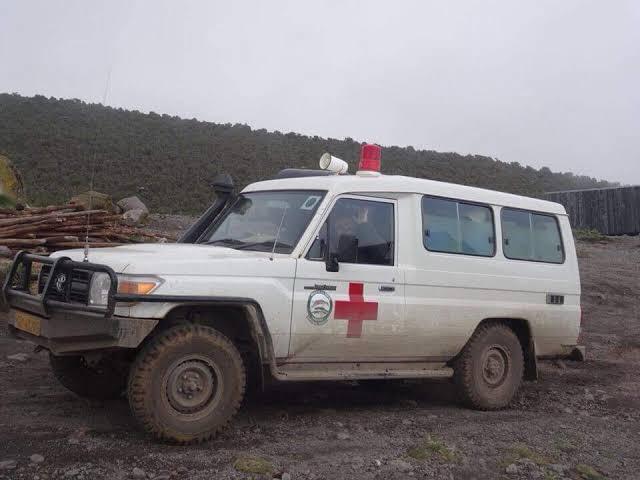
At Kilimanjaro Safaris Champions, the safety and well-being of our climbers is always our highest priority. Climbing Mount Kilimanjaro is an incredible adventure, but due to the high altitude and challenging environment, emergency rescue services are sometimes necessary. That is why the mountain is supported by a professional National Park rescue system, including ambulance evacuation services coordinated by the Kilimanjaro National Park authorities (KINAPA).
The National Park ambulance rescue service is designed to provide fast emergency assistance to climbers experiencing altitude sickness, injuries, exhaustion, breathing difficulties, or other medical emergencies during the trek. Rescue teams stationed on the mountain work closely with licensed tour operators and trained mountain guides to ensure that climbers receive immediate care whenever needed.
Our experienced guides at Kilimanjaro Safaris Champions constantly monitor the health condition of every climber throughout the expedition. Regular health checks, including oxygen level monitoring and symptom observation, help detect any signs of Acute Mountain Sickness (AMS) or other health concerns before they become serious. If a climber develops severe symptoms, the rescue protocol is activated immediately.
Depending on the location and condition of the climber, several rescue methods may be used. In many situations, the climber is assisted down the mountain by guides and porters to designated rescue points such as Horombo Hut or Shira Point, where National Park ambulances can access the mountain roads. The ambulance then transfers the climber to a nearby medical facility for further treatment.
For more serious emergencies, helicopter evacuation services may also be arranged through specialized rescue partners operating on Mount Kilimanjaro. These helicopter rescue services are available for rapid evacuation when immediate medical attention is required and weather conditions allow safe flying operations.
The rescue teams on Mount Kilimanjaro are highly trained in mountain emergency response and high-altitude rescue operations. Communication systems between guides, park rangers, rescue units, and medical teams help ensure quick coordination during emergencies.
At Kilimanjaro Safaris Champions, we strongly encourage all climbers to have travel insurance that includes high-altitude trekking and emergency evacuation coverage up to 6,000 meters. This provides additional protection and ensures smooth emergency assistance if required during the climb.
With professional guides, proper safety procedures, emergency oxygen support, and access to National Park ambulance rescue services, Kilimanjaro Safaris Champions is committed to providing a safe, responsible, and unforgettable climbing experience on Africa’s highest mountain.
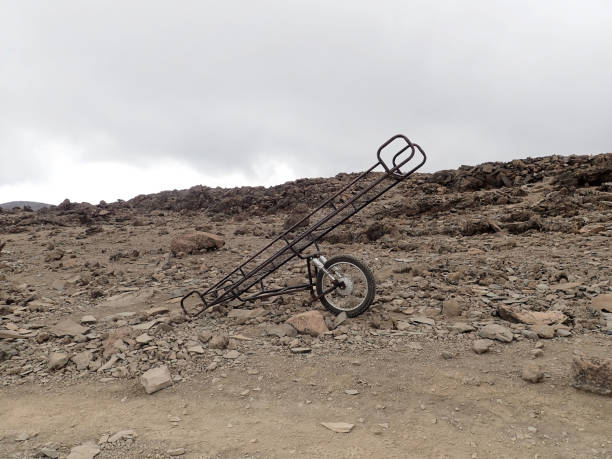
• The Stoller stretcher is a specially designed rescue tool used on Kilimanjaro, mainly available on the Marangu Route.
• It is a wheel-mounted stretcher with a large single wheel in the center, allowing rescuers to push or guide it down the trail instead of carrying the patient on their backs.
• When a climber suffers from severe altitude sickness, injury, or exhaustion, guides and park rangers place them on the stretcher.
• The stretcher is stabilized by two or more rescuers who control balance and speed while moving downhill.
• Because of the wheel design, it can move relatively smoothly over rocky paths, though it still requires strong teamwork and careful handling.
• Reduces physical strain on rescuers compared to carrying a person.
• Faster evacuation than walking the patient down, especially on steep or uneven terrain.
• Safer for the patient, as they remain lying flat and stable, minimizing further injury.
• Available only on Marangu Route huts (Mandara, Horombo, Kibo).
• Cannot be used on all Kilimanjaro routes due to terrain differences.
• Requires multiple rescuers to operate effectively.
• Acute Mountain Sickness (AMS) progressing to HAPE (High Altitude Pulmonary Edema) or HACE (High Altitude Cerebral Edema).
• Leg injuries such as fractures or sprains preventing walking.
• Extreme fatigue or collapse where the climber cannot descend independently.
1. Assessment: Guides identify the emergency and decide stretcher use.
2. Transport to Hut: Patient is moved to the nearest hut or rescue point.
3. Stretcher Deployment: Rangers bring out the stretcher and secure the patient.
4. Controlled Descent: Rescuers guide the stretcher downhill to Marangu Gate.
5. Medical Transfer: At the gate, the patient is transferred to a vehicle and taken to a hospital.
📌 Key Notes
• Stretcher rescue is one of the oldest and most reliable evacuation methods on Kilimanjaro.
• It is not as fast as helicopter rescue, but it is more accessible and less dependent on weather.
• Every climber should know that Marangu Route is the only route with stretcher availability, making it unique compared to Machame, Lemosho, or Rongai.
• A manual evacuation method where professional mountain guides assist a climber in descending safely when they are unable to continue the ascent.
• It is the first line of rescue on Kilimanjaro, used in most emergencies before stretchers or helicopters are considered.
1. Assessment of Condition• Guides monitor climbers for signs of altitude sickness, exhaustion, dehydration, or injury.
• If the climber’s condition is unsafe to continue, the decision is made to descend.
2. Controlled Descent• The climber is supported physically by guides, sometimes walking slowly with assistance.
• If the climber cannot walk independently, guides may use arm support, shoulder support, or improvised carrying techniques until reaching a safer point.
3. Route Choice• Guides select the fastest and safest descent path to reach a lower altitude or the nearest hut/camp.
• Lower altitude quickly reduces the effects of altitude sickness.
4. Coordination with Rangers• At huts or camps, guides may request stretchers or vehicles if the patient cannot continue walking.
• Communication with park authorities ensures backup support if needed.
5. Final Transfer• Once at the park gate, the climber is transferred to a rescue vehicle or ambulance for hospital care.
• Immediate response — guides are always present with the climbers.
• Effective for altitude sickness — descending even a few hundred meters often improves symptoms.
• No special equipment required — relies on guide expertise and teamwork.
• Universal — possible on all Kilimanjaro routes.
• Relies on the climber being able to walk with assistance; if not, stretchers or helicopters are needed.
• Progress can be slow on steep or muddy terrain.
• Physically demanding for guides, especially if the patient is weak or unconscious.
• Mild to moderate altitude sickness (headache, nausea, dizziness).
• Exhaustion or dehydration where rest and descent are enough.
• Minor injuries (sprains, muscle strain) that still allow partial mobility
| Step | Rescue Process | Description |
|---|---|---|
| 1 | Health Monitoring | Guides from Kilimanjaro Safaris Champions monitor climbers daily for signs of altitude sickness, fatigue, dehydration, or injuries. |
| 2 | Emergency Detection | If a climber develops severe symptoms such as difficulty breathing, dizziness, chest pain, or inability to continue, the emergency rescue process begins immediately. |
| 3 | First Aid Support | Trained mountain guides provide immediate first aid, oxygen support, and basic medical assistance on the mountain. |
| 4 | Communication with Rescue Team | Guides contact Kilimanjaro National Park rescue authorities and coordinate evacuation procedures using mountain communication systems. |
| 5 | Mountain Evacuation | The climber is assisted down the mountain by guides, porters, or rescue personnel to the nearest accessible rescue point. |
| 6 | National Park Ambulance Pickup | At designated rescue access points, National Park ambulances transport the climber to a medical center or hospital for further treatment. |
| 7 | Advanced Emergency Evacuation | In critical situations, helicopter evacuation may be arranged depending on weather conditions and emergency severity. |
| 8 | Medical Treatment & Recovery | The climber receives professional medical care and monitoring at the nearest hospital or healthcare facility. |
| 9 | Insurance & Reporting | Travel insurance providers may be contacted to support medical expenses and emergency evacuation coverage. |
Kilimanjaro Safaris Champions is one of Tanzania’s leading tour and safari company, dedicated to delivering exceptional travel experiences